

Hi, I’m Evan Carlisle. With over 12 years of experience working on small engines right here in the Crestwood area, I know that when a piece of equipment stops working, the first question on your mind is usually, “What’s this going to cost me?” It’s a fair question, and getting a straight answer can sometimes feel tough. My goal here is to pull back the curtain on leaf blower repair costs and give you the transparent information you need to make a good decision for your budget and your yard.
September is the perfect time to think about this. Before the heavy leaf season really kicks in, getting your blower serviced can prevent a lot of frustration. Cooler nights and damp morning leaf piles in Crestwood can quickly expose issues like a weak ignition or a clogged carburetor - problems that only get worse once the first freeze hits and the machine sits for a while.
Average Costs in Crestwood
Let's talk numbers. Please keep in mind that these are typical price ranges based on my experience. The final Crestwood KY leaf blower repair price will always depend on a hands-on inspection, but this should give you a solid baseline for budgeting.
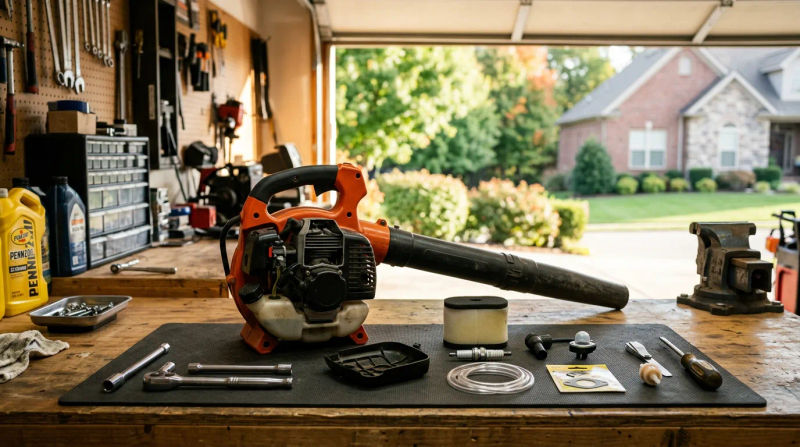
- Standard Leaf Blower Tune-Up: For most handheld or backpack blowers, a comprehensive tune-up usually falls in the $75 to $125 range. This is your best preventative measure and typically includes:
- New spark plug
- Air filter cleaning or replacement
- Fuel filter replacement
- Fuel system inspection
- Carburetor cleaning and adjustment
- Checking the spark arrestor screen
- Test run and final adjustments
- Carburetor Repair or Replacement: This is one of the most common repairs I see, often due to old fuel gumming up the tiny internal passages. A carburetor cleaning or rebuild might cost between $90 and $150. If the carburetor is too far gone and needs to be replaced, the cost could be between $120 and $180+, depending heavily on the blower's make and model.
- Fuel Line Replacement: Ethanol in modern gasoline can make fuel lines brittle and cracked over time. The average leaf blower fuel line replacement cost is typically between $65 and $110. This service involves draining the old fuel, replacing all the lines, installing a new fuel filter, and adding fresh, stabilized fuel.
- Ignition System Repair (No Spark): If your blower has no spark, the issue is often a faulty ignition coil. Replacing one generally costs between $80 and $150, including the part and labor to install it correctly.
Factors That Affect Price
Two blowers can come into the shop with what seems like the same problem, but end up with different repair bills. Here’s why.
- Type of Blower: A handheld consumer-grade blower is simpler and faster to work on than a commercial-grade backpack blower with a more complex engine and harness system. Walk-behind blowers are another category altogether, with larger engines and more components, leading to higher service costs.
- Engine Type (2-Stroke vs. 4-Stroke): Most leaf blowers are two-stroke, requiring a gas and oil mix. They are generally simpler in design. A four-stroke engine, like a small car engine, has separate oil and gas and requires oil changes. A two-stroke fall tune-up estimate might be slightly less than a four-stroke tune-up because the latter includes an oil change.
- Brand and Parts Availability: Parts for well-known brands like Stihl, Husqvarna, or Echo are readily available but can sometimes cost more than parts for off-brand models. However, for some lesser-known brands, parts can be difficult or impossible to source, which can complicate or prevent a repair.
- The Extent of the Problem: This is the biggest variable. A simple tune-up is straightforward. But if the blower was run with straight gas instead of a 50:1 mix, the engine could be scored and require a complete rebuild or replacement, which is often more expensive than buying a new machine. Problems often cascade; a clogged fuel filter can lean out the engine, causing it to overheat and do more damage.
- Labor: An experienced technician might have a higher hourly rate, but they can often diagnose and fix the problem much faster than someone less experienced, saving you money in the long run.
How to Get the Best Value
As a technician, my best customers are the ones I see for routine maintenance, not catastrophic failures. Getting the best value isn't about finding the cheapest fix; it's about being smart and proactive.
- Don't Skip the Tune-Up: The single best way to save money is by investing in an annual tune-up. A standard leaf blower tune-up cost is a fraction of what you'd pay for a major repair caused by neglect.
- Use the Right Fuel (and Stabilizer): This is my most repeated piece of advice. Use high-quality, ethanol-free pre-mixed fuel if you can. If you mix your own, use fresh gasoline and a quality oil. At the end of the season, use a fuel stabilizer before storing the blower to prevent the fuel system from getting gummed up.
- Address Problems Early: Is your blower getting harder to start? Does it seem to bog down at full throttle? These are early warning signs. Bringing it in for a check-up when you first notice an issue is far cheaper than waiting for a complete breakdown.
- Consider the Age of Your Home and Yard: Many of us in Crestwood and the surrounding areas live in lovely homes from the 1950s and 60s. These properties often have large, mature trees that drop a massive amount of leaves. For these yards, a powerful, reliable leaf blower is an essential tool, not a toy. Investing in a quality machine and keeping it properly maintained is a smart financial decision that saves you time and back-breaking work every fall.
Questions to Ask Your Contractor
When you take your equipment to a shop, you should feel confident and informed. Don't be afraid to ask questions. A good technician will be happy to answer them.
- Do you provide a detailed estimate before beginning any work?
- What, specifically, is included in your standard tune-up package?
- Is there a diagnostic fee, and if so, is it applied to the final repair bill?
- What is your warranty on parts and labor?
- How long do you expect the repair to take?
- Do you use original equipment manufacturer (OEM) parts or aftermarket parts?
Being armed with this information helps you understand exactly what you're paying for and ensures there are no surprises.
Ultimately, keeping your equipment in top shape is about being prepared. A little bit of maintenance in September ensures that when the leaves are piling up in October and November, your blower starts on the first or second pull. As an owner-operated shop, my team and I believe in clear communication and fair pricing. For a personalized estimate for your leaf blower here in the Crestwood area, feel free to contact Monroe Small Engine Repair And Service for a free consultation. We're happy to take a look and get you ready for fall.